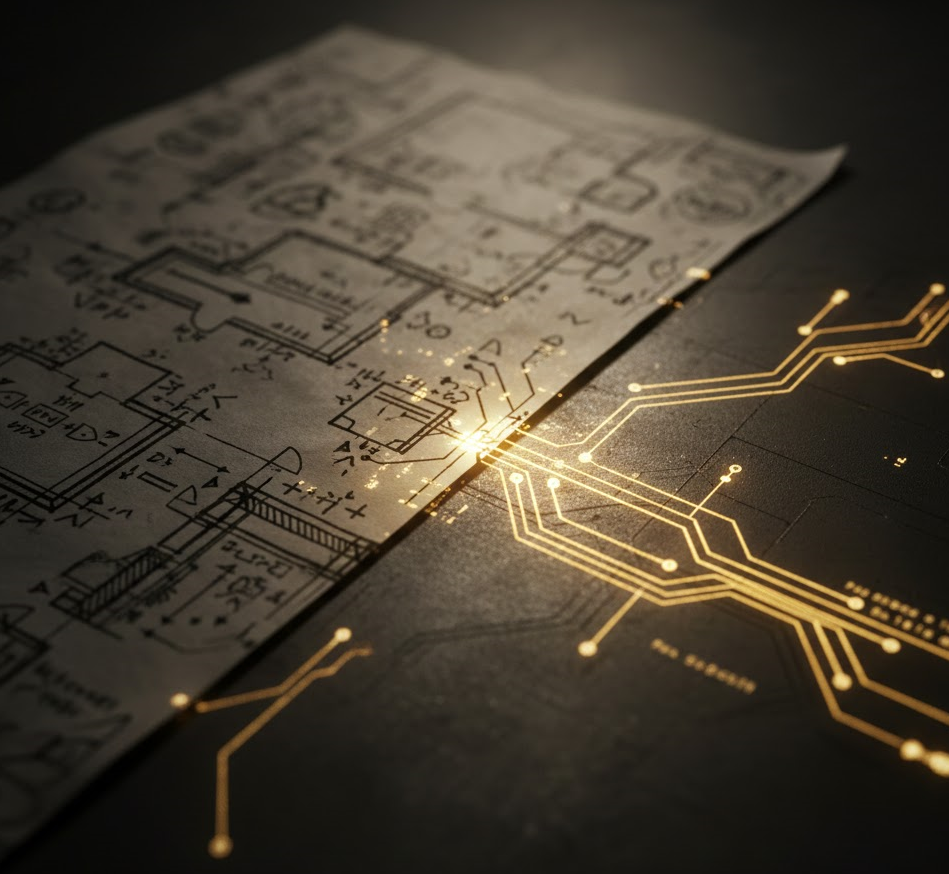
Note: This article was architected by me and synthesized in collaboration with AI. As you read, ask yourself: Where does the machine end and the intent begin? Is the 'line' visible to you?
When I was younger, the dream was JARVIS. I watched movies where a genius sat in a lab and spoke ideas into existence, and the machine handled the friction of reality. Today, we have OpenClaw and models that feel like they’ve leaped off the screen. It’s nuts. We are effectively already 'there'.
But now that I have my personal JARVIS, I’ve started to wonder: Where is the line?
The Discomfort of the Synthetic
I read an article today and felt a strange 'uncanny valley' sensation. It sounded like AI. It was grammatically perfect, structured logically, and yet, it felt hollow. It’s a weird feeling—reading words that have no heartbeat behind them. If I use AI to write my own thoughts, do I lose that human pulse?
I’ve even started using AI to bridge the gap between my reading and my reality. I read a book and ask a model to relate the concepts to my life based on what it knows about my goals. It’s incredibly useful, but it triggers a valid concern: Am I thinking less? If a machine synthesizes my meaning for me, am I still the one living my life?
The New Engineering Skillset
In my day-to-day as an engineer, the line is even blurrier. I code with AI constantly. Is that bad? I don’t think so. It just means the 'valuable' skills have shifted. The syntax is now a commodity. The real skill is now Architecture and Debugging.
- Understanding the underlying system architecture so you can guide the AI.
- Developing the 'smell' for AI-generated bugs that a junior dev might miss.
- Injecting the 'Human Edge'—the edge cases, the nuance, and the 'taste' that a probabilistic model can't simulate.
Conclusion: Taste is the Guardrail
AI is the future, and I am running toward it with open arms. But the line exists at the intersection of Intent and Taste. The machine can provide the blocks, but the architect must still decide the shape of the house.
Originality in 2026 isn't about avoiding AI; it’s about making sure the 'JARVIS' in your life is an assistant, not the author.